TF8.
The calm classic with the chef's hat cap. A distinctive cubensis variant and stable parent to the ToqueF8 Nerds mutation. Thick stems, signature white-topped caps, balanced character.
TF8's distinctive "toque" cap and the gap between cap-only vs. whole-fruit testing.
We're exploring the pattern.
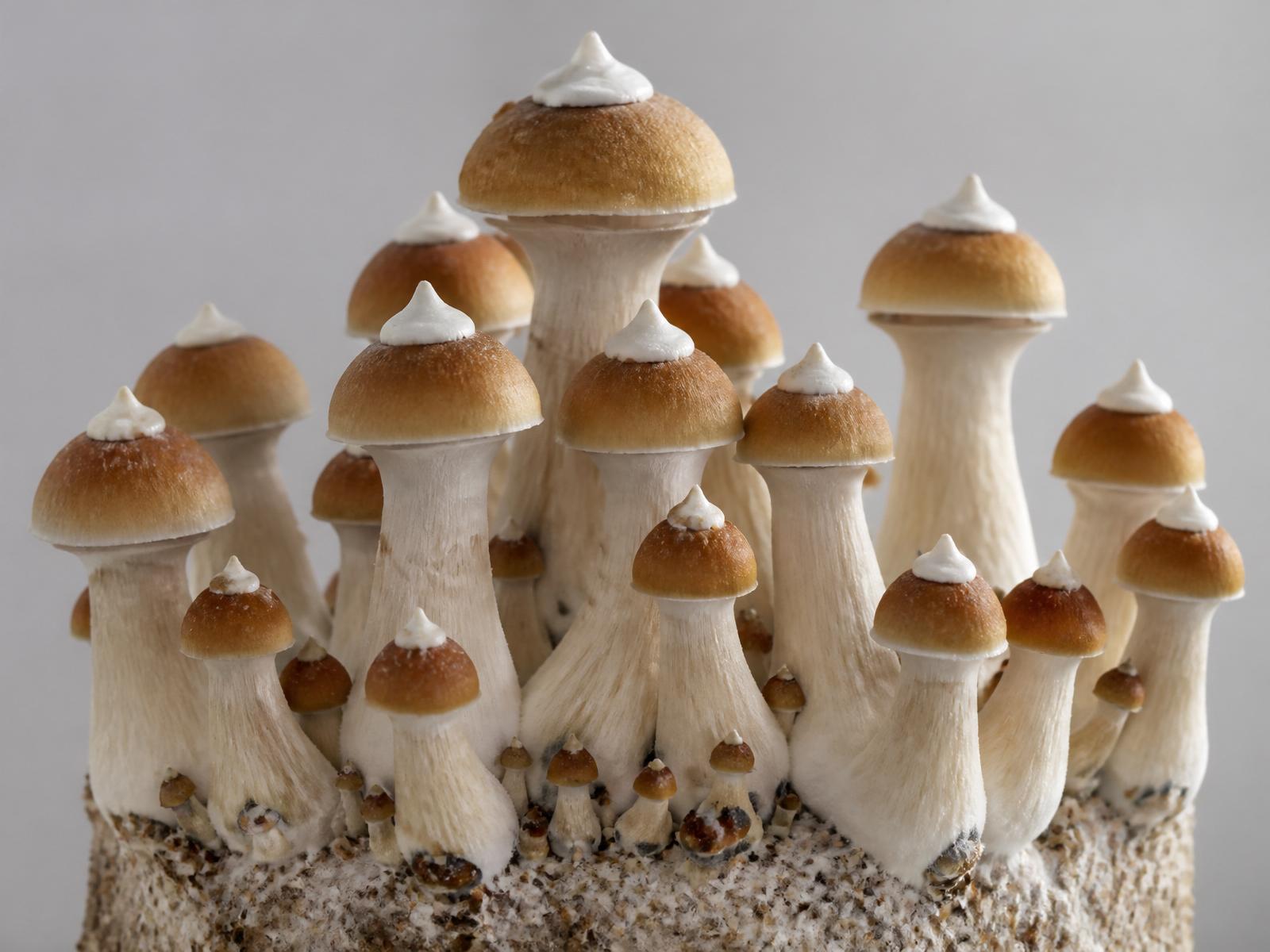
TF8 (Toque F8) is the calm, stable parent strain in its line — the classic fruiting body morphology from which the more expressive ToqueF8 Nerds mutation emerged. What stands out visually is the bright white "toque" (chef's hat) that frequently crowns its caps, giving the fruits a distinctive, almost uniformed appearance.
Operational testing has revealed clear differences between cap-only ("toque caps") and whole-fruit results. This site gathers structured data and experiences to better understand how morphology, testing methodology, and material selection influence both lab numbers and the felt journey.
We invite growers, facilitators, and psychonauts to share observations so patterns become clearer together.
- • Signature white "toque" topping on many caps — the namesake feature
- • Thick, dense white stems and reliable classic morphology
- • Calm, balanced character in reports — the stable "parent" to more variable mutations
- • Clear potency difference between cap-only and whole-fruit testing
Laboratory & Operational Tested Data
Measured potency from community + operational samples for TF8 (Toque F8)
Toque Caps vs Whole Fruit — Why the difference matters
Operational testing on TF8 shows a clear gap between cap-only material ("toque caps") and whole-fruit testing. This is early but useful data that highlights how material selection affects measured totals — and raises practical questions about real-world dosing.
More testing across batches is underway. Your real-world reports on how TF8 feels when using whole fruit vs. cap-focused material help complete the picture.
TF8: The Toque cap, classic morphology & testing nuances
Grounding facts and what the morphology + data suggest
Grounding Facts
TF8 (Toque F8) is a selective isolation of Psilocybe cubensis prized for its classic, reliable fruiting body morphology. It is the stable "calm parent" from which the more variable and expressive ToqueF8 Nerds mutation was derived.
The most distinctive visual feature is the bright white "toque" (chef's hat) that frequently appears at the apex of the caps. This is not just decorative — it has become the reliable identifier for the strain and the direct inspiration for its name. The goal of the name was to celebrate this playful morphology while clearly signaling it is not a reference to other interpretations of "TOK".
TF8 produces dense clusters with thick white stems and caps that often retain the white topping even as they mature. Community reports and facilitator feedback consistently describe balanced, grounded experiences with good visual geometry and reliable depth — without the occasional intensity spikes associated with more extreme variants in the broader family.
What the Profile Suggests
The operational testing data highlights a practical reality: cap-only material ("toque caps") consistently reads higher in total alkaloids than whole-fruit testing. This is expected — stems generally contain lower alkaloid density than caps — but it has real implications for dosing and for how we interpret lab numbers across different grows or preparation styles.
The white toque itself may correlate with robust growth characteristics. The strain's reputation as the "calm parent" fits both its morphology (classic and stable) and its reported experiential profile (balanced rather than chaotic).
While full HPLC minor alkaloid profiles for specific Sont batches are still being compiled, the existing operational data already gives useful guidance: if you're working with cap-heavy material or extracts, expect the higher end of the range; whole-fruit or mixed material will land closer to the 1.2% reading.
Limitations & Variables
As with any strain, individual factors matter enormously: preparation method (whole fruit, tea, lemon tek), whether the dose is cap-heavy or includes stems, stomach contents, set & setting, personal metabolism, and expectations. A cap-focused dose may feel noticeably stronger by weight than a whole-fruit dose of the same weight.
The distinction between TF8 (classic) and ToqueF8 Nerds (mutated) is also worth tracking in reports — the two can feel different even though they share the same parent genetics.
Why We're Collecting Reports
This is exactly why structured community input is valuable. The more detailed reports we gather — including whether material was whole fruit, caps only, or tea; preparation method; onset timing; visual intensity; and how it compares to ToqueF8 Nerds or other strains — the better we can understand what makes TF8 feel reliably calm and classic to so many.
If you've worked with TF8 (or the Nerds mutation), your experience helps build a clearer picture for everyone.
Share your TF8 experience
Your report helps build collective understanding of this strain. Quick answers are optional — answer as many or as few as you like. A photo on its own is enough.
Community Photos & Reports
Every report and photo below was reviewed by a curator before publication.
Only reports whose authors opted into the community board appear here.
No approved photos yet. Attach one to your report above.
Send a note to the curator
Questions, corrections, or something you'd rather not publish? This goes straight to the curator and is never shown on the site.